
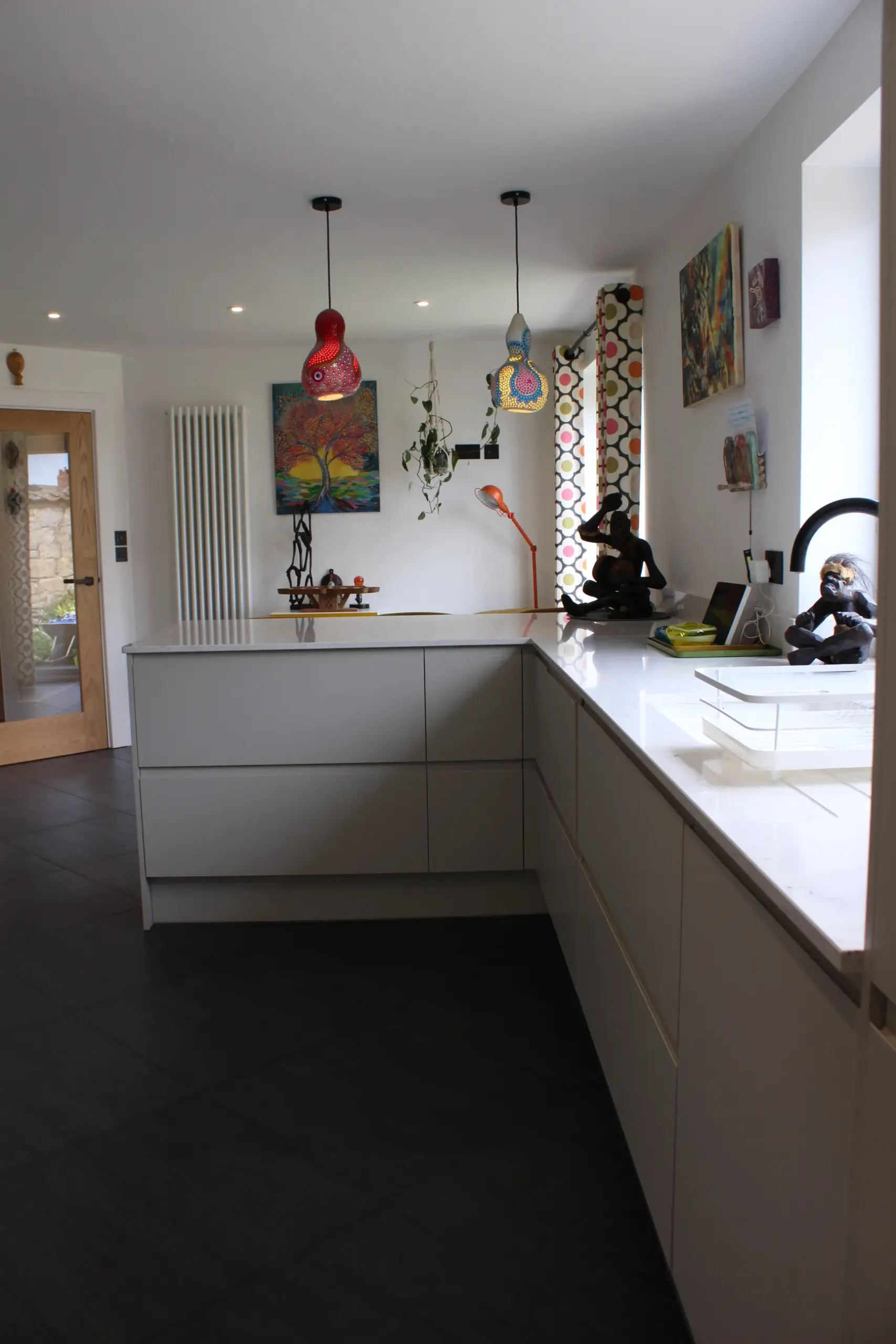
The kitchen is probably the room that frustrates people most when they start thinking about extending. It’s too small, the light is awful, or it just feels completely separate from the rest of the house. And for a lot of UK homes, particularly Victorian terraces and 1930s semis, that’s almost baked into the design. The kitchen ended up at the back and nobody really questioned it at the time.
A rear extension is the obvious answer, and when it’s done well it changes the house more than almost any other project. Not in a cosmetic way, but in how the house actually works for the people living in it. Construction Interior Design Limited has been building kitchen extensions across the Midlands for over twenty-five years, so the thinking below comes from real projects, not hypotheticals.
What Actually Matters Before You Pick a Layout
People tend to jump straight to Pinterest boards and kitchen showrooms. That’s fine for getting a feel for what you like, but the decisions that will actually make or break the space come earlier than that.
The first one is how the extension connects to the rest of the house. It sounds straightforward but it catches people out more than you’d think. You can end up with a beautiful new kitchen that feels oddly disconnected from the hallway, or where the flow between the back door and the living room doesn’t work the way you expected. Getting someone to walk through how you actually use the house on a normal day, before any drawings are done, saves a lot of headaches later.
The second is where the light comes from and when. A rear extension that faces north is a different project to one that catches afternoon sun. That affects how much glazing you need, where you put it and whether a south-facing wall is better used for windows or for tall storage.
The rear extension kitchen ideas that tend to work well are the ones where those questions get answered before anyone talks about worktop finishes.
Rear Extension Kitchen Ideas: Open-Plan and Why It’s Not Always the Whole Answer
Most people want open-plan and it’s not hard to see why. Done properly it’s a genuinely better way to live, especially with kids. You’re cooking, you can see what’s going on, people drift in and out, the space feels generous. The kitchen stops being somewhere you disappear into.
The usual approach is to have cooking, eating and sitting areas running through the same space, with no walls dividing them. An island or a change in floor level can define the zones without closing them off.
But open-plan has its limits and it’s worth being honest about them. If someone in the house works from home and needs a quiet corner, a fully open space makes that harder. If you cook a lot, extraction becomes more of an issue because smells travel. Some people just don’t like the idea of the kitchen being on show all the time. None of that means open-plan is wrong, it just means it’s worth thinking about before committing to knocking everything through.
A large sliding door between the kitchen and a sitting room, for instance, gives you the best of both. Open when you want it, closed when you don’t. It’s not the most exciting design decision but it’s a practical one.
Glazing: The Bit Where Rear Extension Kitchen Ideas Tend to Go Wrong
Full-width bi-fold doors across the back of the house look great in photos. In real life they can work brilliantly or they can be a cold, expensive disappointment depending on which way the house faces and how the space is used.
A north-facing rear extension with a fully glazed back wall will be grey and cold for a good part of the year. It also means less wall space, which affects where units, radiators and sockets can go. If you’ve got a busy family and the kitchen is going to be constantly used, floor-to-ceiling glass at the back isn’t always the most practical choice.
Roof lanterns are worth serious consideration because they bring daylight in from above without touching the walls at all. A single large lantern above a dining table does more for the quality of light in a room than most people expect. Pair that with a set of bi-fold or sliding doors and a couple of generous windows and you usually get more light than a full glass wall would give you anyway, and a more comfortable room in winter.
At Construction Interior Design Limited we always look at the orientation of the plot and which parts of the extension will be in shade before agreeing where the glazing goes. It’s one of those things that costs nothing to think about at the design stage and a lot to fix afterwards.
Rear Extension Kitchen Ideas: Which Layout Suits Your Extension
The layout options come down to a few basic shapes, and the right one depends more on the footprint of the extension than personal preference.
A galley setup, with units running down two parallel walls, suits narrower extensions well. It keeps everything within easy reach and works when the cooking zone needs to be efficient and compact, opening out into a separate dining area beyond.
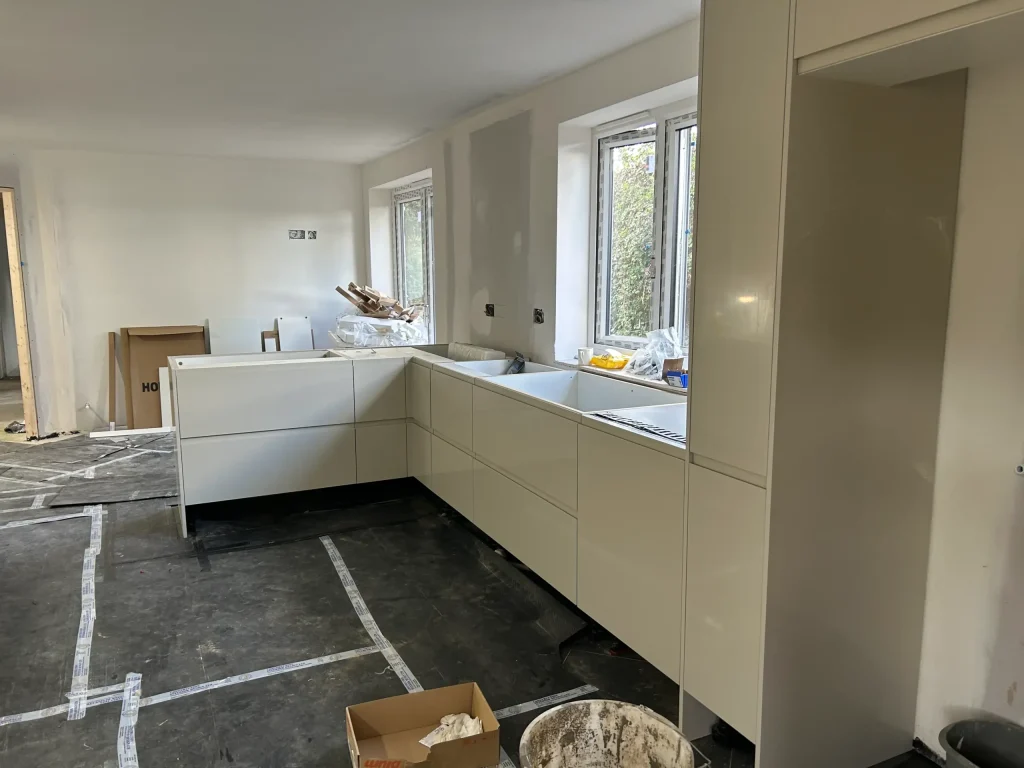
An L-shaped layout is probably the most common for rear extensions because it’s adaptable. Units wrap around two walls and the rest of the floor space is free for a table or a sofa. It works in most shapes and sizes.
An island works when there’s enough room to do it properly. The number people often quote is a metre of clear space around it on all sides, though a bit more than that is more comfortable. An island that’s too tight to move around is worse than no island at all, and it’s a very easy mistake to make on a drawing that looks fine on paper.
One practical thing that doesn’t get enough attention: where does everyone land when they come in from outside? Bags, coats, shoes, shopping. If the layout doesn’t account for that, you end up with a beautiful kitchen that’s perpetually cluttered in the wrong places.
Planning Permission: What You Need to Know
A single-storey rear extension will often fall under permitted development, which means no planning application is needed. Whether that applies depends on the size of the extension, the type of property and local authority policies. Conservation areas have stricter rules, as do some listed buildings and certain terraced properties.
It’s not something to assume either way. Getting it wrong causes problems when you sell, and in some cases it means having to alter or remove work that’s already been done. Construction Interior Design Limited sorts through the planning position at the start of every project, before any money is spent, so there are no surprises.
Worktops, Flooring and Finishes: A Few Honest Thoughts
Quartz is popular at the moment and for good reason. It holds up well, doesn’t need sealing and looks clean. Granite is more heat resistant if that matters to you. Hardwood suits more traditional kitchens but it needs looking after properly otherwise it deteriorates. Laminate has improved significantly and at the right price point it’s a completely reasonable choice.
For flooring in an open-plan extension, large format porcelain tiles are a good option because a single surface running through the whole space makes it feel bigger and easier to clean. Engineered wood gives a warmer feel underfoot and handles kitchen moisture better than solid wood.
Lighting is the thing people spend the least time on and regret most afterwards. Spotlights for general light, strips under the cabinets for the worktop, something over the table or island that creates a bit of atmosphere. A dimmer on the main circuit is cheap to add and makes the room work at every time of day. It’s genuinely worth doing.
How Construction Interior Design Limited Runs a Kitchen Extension
The frustration most people have with building projects is that nobody talks to each other. The builder finishes and then you’re chasing the electrician who’s waiting on the plumber and nothing actually moves until you’re the one pushing it.
Construction Interior Design Limited handles the whole job from the ground up. Foundations, drainage, structure, roofing, plastering, tiling, heating, electrics and the kitchen installation itself. If you have a kitchen supplier already we’ll coordinate with them. If not we can supply and fit as part of the same contract. One team, one point of contact, one programme.
We also know most clients are living in the house throughout. That shapes how we work on site, how we sequence the disruptive stages and how we communicate about water and power interruptions. It’s not a small thing when you’ve got a family to get out the door every morning.
Is a Rear Kitchen Extension Right for You?
For most homes in the Midlands it’s one of the better investments you can make. It adds space, light and genuine daily usefulness in a way that a new bathroom or a loft conversion often doesn’t. But the right answer depends on your property, your budget and how you actually live, and the only way to get a straight answer on that is to talk it through with someone who can look at the specifics.
Get in touch with Construction Interior Design Limited today by calling 01476 860800 or fill in our online contact form and we’ll give you an honest view of what’s involved for your home.
